


A high-stakes contempt dispute is unfolding after a subpoena was issued to an NBC correspondent in connection with a murder trial. The case, People of the State of New York vs. Ganesh Ramsaran, has drawn attention to the protections afforded to journalists covering the Supreme Court and other sensitive judicial matters.
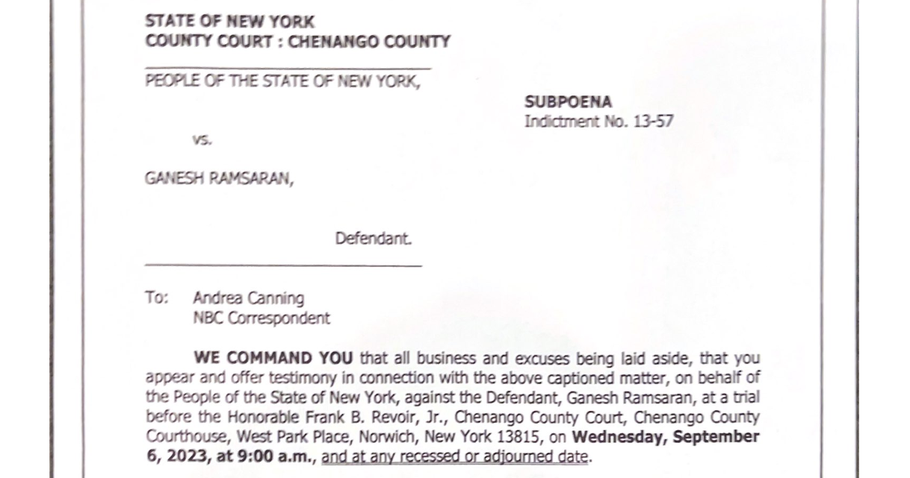
The subpoena, issued in Chenango County, New York, sought to compel Andrea Canning, a correspondent for NBC, to appear and offer testimony in the murder case. However, the subpoena was later quashed, raising questions about the limits of press compulsion in criminal proceedings.
Separately, the Justice Department issued and then withdrew grand jury subpoenas, as captured in records from late June 2026. This pattern of issuing and retracting subpoenas has fueled the contempt fight, with attorneys arguing that the government’s actions undermine press freedom.

The controversy centers on whether a reporter can be held in contempt for refusing to comply with a subpoena that was already quashed or withdrawn. Legal experts note that such disputes could set a precedent for how courts handle demands for journalist testimony in high-profile cases.
“This is a critical test of the balance between the need for evidence and the protection of newsgathering,” said one observer.
The outcome of this contempt fight may shape future rules for subpoenas targeting reporters covering the Supreme Court.
As the legal battle continues, press advocates are closely monitoring the developments, calling for clear guidelines to protect journalists from being forced to testify about their sources and reporting.


